Did you know that your horse’s liver is the largest gland in their body, weighing on average between 5 – 9kg, depending on the size of horse and constitutes 1% of your horse’s body weight? It’s situated immediately behind the diaphragm and in front of the stomach and is held in position by six ligaments and the pressure of the surrounding organs. The liver is one of the accessory glands of the digestive system, the others being the pancreas and the salivary glands. At a cellular level the liver is made up of identical functional cells called hepatocytes, which act identically to the liver as a whole and are continually metabolically active.
In a nutshell the liver is an amazing organ with a huge impact on metabolism and overall health, so significant damage and disease can be potentially life threatening.
Lisa Elliott, MSc Equine Nutrition Solutions shares some insight and understanding of the key role of this essential organ, signs of liver disease and how to feed horses with liver disease to provide the best nutritional support.
Liver Functions
The liver is a true multi-talent within organs, and it’s thought that it has over 100 different functions! The most significant are:
- Producing bile to digest fat
- Producing cholesterol and special proteins to help carry fats through the body
- Protein Synthesis – producing proteins for blood plasma like albumin and fibrinogen
- Converting excess glucose into glycogen for storage, and back again for energy supply
- Storage of fat-soluble vitamins (A, D, E, K) and Vitamin B12.
- Regulating levels of amino acids which form the building blocks of proteins.
- Processing haemoglobin – which helps carry oxygen round the body and deliver it to tissues
- Converting ammonia to urea
- Clearing the blood of drugs and toxins
- Regulating blood clotting
- Producing immune factors and removing bacteria from the bloodstream
The liver is a highly active organ and has a large energy requirement. Ideally, a horse’s diet should provide what the horse requires without stressing the liver too much, put simply – meeting but not exceeding what is required.
What happens when it goes wrong?
There can be many causes of liver damage or disease but perhaps the best known is Pyrrolizidine alkaloids toxicity due to eating ragwort. The liver is perhaps best known for its detoxification function – breaking down harmful substances and eliminating them with the help of bile and the kidneys.
If this function is compromised or stopped, it can have serious health effects for the body. Additionally, the reduction in ability to carry out the many vital metabolic functions in which the liver is key, means overall health and well-being is also severely compromised.
Liver disease can be identified relatively easily by means of a blood count or measuring liver enzyme levels. These enzymes are released by damaged liver cells and then enter the bloodstream. However, due to the liver’s remarkable regenerating capabilities, liver disease can be very difficult to diagnose without blood tests because clinical symptoms will only appear after damage to a significant volume of liver tissue, meaning that prevention is generally better than cure.
Common signs of liver disease
In general horses do not show signs of liver disease until at least around 75% of the liver has been damaged. Signs of liver disease include:
- Jaundice: May be visible in the horse’s mouth, nostrils, or eye areas
- Loss of condition
- Abdominal pain
- Reduced blood clotting, leading to excessive bleeding
- Diarrhoea
- Discoloured urine
- Yawning
- Head pressing
- Depression
- Decrease appetite or anorexia
- Photosensitivity (sensitivity to UV light)
Additionally, severely compromised liver function can lead to secondary problems like hyperinsulinemia and insulin resistance because the liver is no longer able to move insulin out of the bloodstream.
By the time liver damage reaches 75% or more and clinical signs of liver disease start to show, management is generally the only option. However, the good news is that the right nutrition to meet daily requirements without increasing stress on the liver, whilst being sympathetic to compromised metabolic function, can help support regeneration and maintain overall health:
How Nutrition can help
In the past, nutritional management of horses and ponies with liver disease has focused on providing a low protein, low oil and often a high starch diet. However, with improved knowledge of liver disease in horses and other species, such adjustments are no longer supported.
In fact, dietary adaption is no longer recommended at all in cases of ‘compensated’ liver disease (where there are no significant outward symptoms) unless the current diet is significantly over-supplied with protein or starch.
The following feeding guidelines, therefore, apply to horses with severe liver disease showing signs such as weight loss, jaundice and depression or abnormal blood results such as low serum albumin.
Protein
You should always aim to meet but not exceed protein requirements and this is where quality over quantity applies. Ammonia build-up from excessive protein could stress the liver, so providing smaller levels of good quality protein is the best way to ensure daily requirements are met whilst minimising metabolic demands on the liver. Excessive protein intake may be most detrimental in horses and ponies showing neurological signs of liver disease such as head pressing but encouraging the horse or pony to eat can often be more important than restricting protein intake. Overly restricting protein intake can also lead to the breakdown of muscle tissue, so providing sufficient levels of quality protein and in particular the key amino acid lysine is vital.
Additionally, it is thought that providing Branched Chain Amino Acids (BCAA’s) which are a group of 3 essential amino acids (leucine, isoleucine, and valine) can be beneficial and help improve the attitude of the horse whilst again minimising liver stress, as they are not extensively taken up by the liver.
All the Coligone Balancers, as well as MultiVit Pro provide essential amino acids to help ensure horses with a compromised liver receive optimal nutritional support.
Forage
Forage should remain the foundation of the horse’s diet and ideally be fed ad-lib, so they are never without. Always ensure forage is of a good quality to optimise nutrition and digestibility and reduce the need for alternative energy sources like starch from cereals.
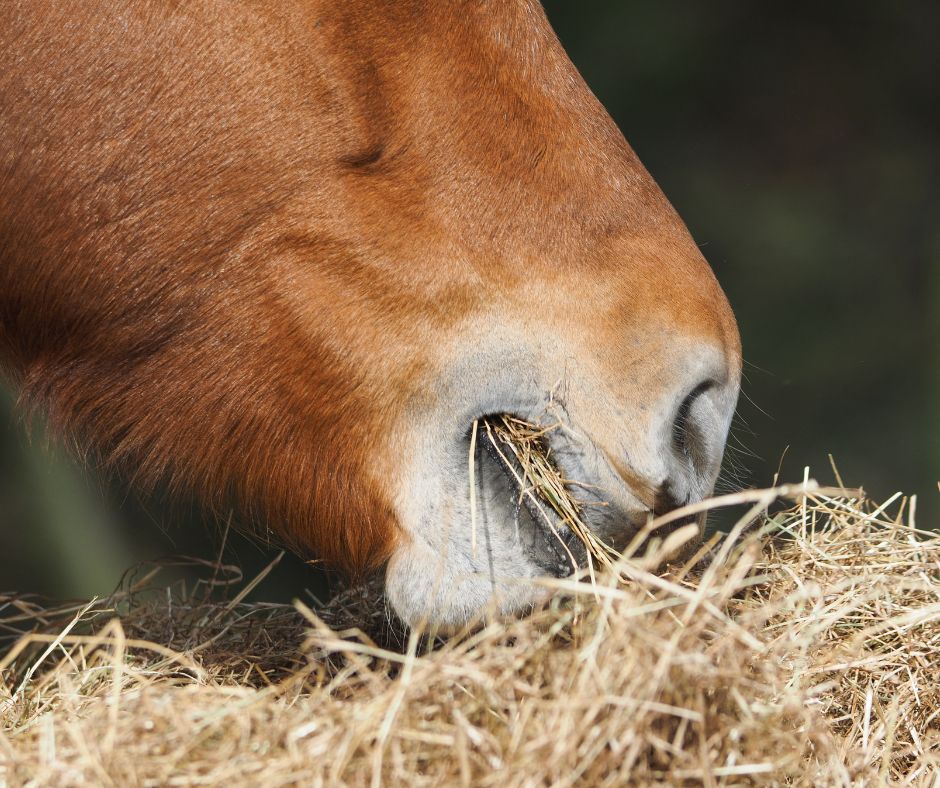
However, for horses with a severely compromised liver, care should be taken when turning out on ‘lush’ pasture or providing high protein hay or haylage, particularly for horses showing neurological signs of liver damage.
Getting hay or haylage analysed will determine nutritional value including protein levels, which is important for horses with liver damage. As forage forms the main part of a horse’s diet, ensuring that the forage you are providing creates minimal stress to the liver is essential with helping to maintain health and support recovery.
Letting your horse graze for several hours (10-14) is often the best approach but it is important to ensure that pasture is free from ragwort and all other weeds to minimise detoxification demands on the liver. Shorter periods of turnout where horses and ponies can suddenly ‘gorge’ larger amounts of grass are not ideal because this can disturb the hindgut microbe population and compromise digestive health.
Horses that are showing signs of photosensitivity will benefit from being turned out at night to avoid the effects of sunlight.
Highly Digestible Fibre
If your horse has lost condition due to liver disease, then additional feeds may be needed to help them gain weight. However, due to secondary issues linked with liver disease, particularly hyperinsulinemia and insulin resistance, cereal based feeds containing higher levels of starch are best avoided.
Instead providing feeds rich in highly digestible fibre can help add condition whilst minimising starch and sugar intake. Coligone High Fibre Cubes and Fibre Bio Cubes will help provide additional calories without exacerbating insulin resistance and because fibre is digested in the hindgut by the microbial population, metabolic demand on the liver is also minimised.
Additionally, dividing feeds into small, frequent meals (ideally 4-6) can be a beneficial management approach. Smaller, frequent meals provide a continuous supply of energy which reduces the reliance on gluconeogenesis (mobilisation of energy stores by the liver from glycogen to glucose to provide an energy supply for the body) and keeps demands on the liver to a minimum, helping to reduce liver issues and maintain better health.
Oils
Oil can be a useful addition for weight gain where horses have lost substantial weight. Current recommendations suggest that for horses with liver damage, oil can be fed at 0.1-0.5ml/kg body weight per day in the total diet or 50-250mls per day for an average 500kg horse provided there are no signs of malabsorption such as diarrhoea or steatorrhea (fat in the faeces) or other contraindications advised by a vet.
Coligone ExSelenium Oil can help provide extra calories, alongside correct levels of beneficial Omega 3, 6 and 9 fatty acids, while also supporting the immune system, which is vital for horses with liver disease who will have reduced immunity. Oil should, however, be introduced gradually, adjusting the quantity fed according to the horse’s energy requirements.
Vitamins & Minerals
Providing a balanced diet which supplies recommended levels of vitamins and minerals is essential for all horses to help support health and vitality. Reduced liver function means that certain vitamins (A, D and E) may not be absorbed and stored efficiently, so supplying these in the diet at optimal levels is recommended. Plasma zinc concentrations can often be low in horses with liver disease and zinc should, therefore, also be supplied at optimal levels.
Additionally, it is important to ensure that minerals like iron and copper both of which are stored in the liver are not oversupplied, to minimise demands on the liver. Antioxidant vitamins like Vitamin E and C (which is made by the liver) are also vital in helping to maintain overall health so ensuring these are supplied at daily recommended levels is also a good idea.
Feeding an advanced specification balancer like Coligone Balancer can help supply optimal levels of essential vitamins and minerals in the face of severely compromised liver function. Additionally, Coligone Powder and Liquid are packed with key vitamins and minerals and will also help supply optimum levels to horses with reduced liver function, helping to maximise health and condition.
Please click or copy and paste the link for more info on Coligone products: http://www.hbradshaws.co.uk/products/
If you have any questions about how to create the best diet for your horse and keeping your horse healthy through the right nutrition, please contact Coligone – 0333 0503785/07986 183616 or sales@hbradshaws.co.uk.